Breathing Exercises
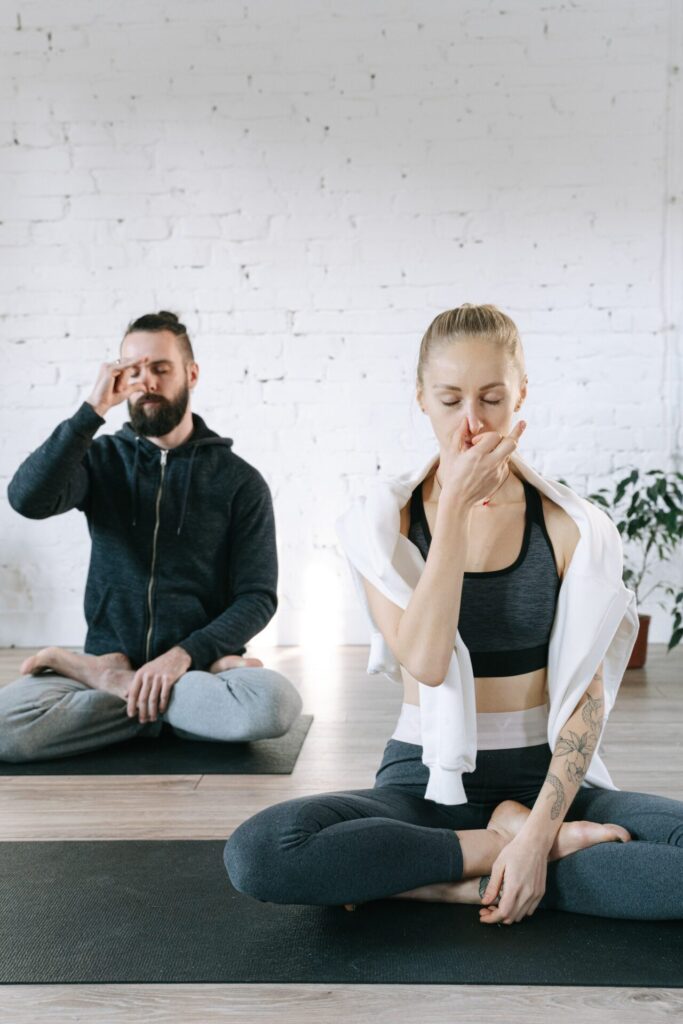
Breathing exercises are a great technique to unwind and re-establish a link between your brain and your body. Some of the more effective methods of slowing your breathing are listed below.
How Breathing Exercises Help
Breathing exercises can help in numerous ways. The following are examples of advantages:
Mental health can benefit from breathing exercises.
The ability to regulate one’s breathing is directly correlated with emotional regulation. Relaxing and de-stressing through breathing exercises has been linked to improved mental health.
Better oxygenation of the blood occurs when one’s breathing is under control. More calories burned means more weight loss potential.
Unfortunately, many individuals lack the knowledge necessary to breathe well. If you want to get all the air into your rib cage when you breathe in, you need to compress your diaphragm. The lungs should expand after the diaphragm has contracted. Taking deep, even breaths like this might have a calming effect and help you feel less stressed.
A healthy lifestyle, including regular exercise and preventative measures like breathing exercises, can greatly reduce the risk of developing many illnesses.
Inhale deeply.
Deep breathing is a highly effective form of breathing. By doing so, you can fill your belly with air while also using your full lung capacity. Here’s what you should do:
Spread out flat on the floor or in bed. If you’re sleeping on the floor, prop yourself up using pillows for your head and legs.
Take a few slow, deep breaths through your nose until you feel like you can’t take another.
• Let out a long sigh.
Put one hand on your chest and the other on your stomach.
Again, breathe in and out via your nose. Feel the movement in your stomach and chest.
Again, take five slow, deep breaths.
The second is to focus on your breath.
Focused Breathing
Another effective technique for breathing is called “Breath Focus.” Breath concentration is the practice of using one’s mind to pay attention to the psychological and physiological effects of breathing. The following are some examples of how you can put breath focus into practice:
Turn out your lights and close your eyes.
• Inhale deeply three times and exhale completely.
As you take a deep breath in, picture the air going in via your nostrils, down your throat, and all over your body.
Visualize your stress and anxiety leaving your body with each exhalation.
Please maintain this position for 10–20 minutes.
Ujjayi Breathing
The third stage of Ujjayi Breathing is called Ujjayi Breathing.
Ujjayi (ooh-HAY-yee) breathing is one of the most powerful strategies for relieving stress and calming the mind. It may be a little disconcerting to others if you try this new way of breathing, but trust me: it’s well worth it. Here’s what you should do:
Turn out your lights and close your eyes.
• Inhale deeply until your lungs feel completely full.
To make a scratchy “ahh” sound, you should tighten your neck when you exhale.
You can repeat this process as often as you wish.
A Morning Exhale
If you suffer from muscle tightness in the morning, try this breathing exercise. Here’s what you should do:
Lean forward and twist your waist.
To accomplish this, lean forward just a bit and let your arms hang limp near the floor.
• Take a big breath and stand up again. You can probably roll yourself up and get to your feet. Your skull should be the very last thing you pick up.
You should let out some air when you get back to a standing position.
Five more times, please.
One of the best things you can do for your body is to breathe deeply and regularly. Proper breathing ensures that your body receives the oxygen it requires. Learning how to breathe properly is essential since improper breathing can cause a host of medical issues.
Here are three suggestions for improving your breathing:
1. First, work on nasal breathing.
The very first thing you need to do is train yourself to breathe in and out through your nose. To acquire the oxygen your body requires, you should breathe in through your nose, as this places your nose and throat in proximity.
2. Maintain an open chest position.
To maintain proper breathing, it’s important to keep your chest open. When you breathe, your chest should be pushed out and down.
3. Relax by taking long, deep breaths
Proper breathing is good for you because it helps you to stay healthy and energetic. When you breathe properly, your body gets the oxygen it needs to function properly. Oxygen is essential for your body to create energy, and it also helps to keep your blood pressure healthy. When your breathing is bad, it can lead to problems like anxiety, stress, and asthma. If you are struggling to breathe, see a doctor or a health professional to get help.